You want reliable data when you travel. You also want clear pricing, strong coverage, and simple setup. I have tested multiple eSIM providers across regions, and I see clear reasons RedteaGO is better than Holafly for most global users.
You deal with flight delays, language barriers, and unfamiliar cities. Your mobile data should not add more friction. I will walk through pricing, coverage, flexibility, ease of use, and support, and explain in practical terms where RedteaGO pulls ahead and where Holafly still fits.
By the end, you will know when to choose RedteaGO vs Holafly and how to match a plan to your travel style and budget. I will use the main reasons RedteaGO is better than Holafly as the structure for every section.
RedteaGO vs Holafly at a Glance
I start with a quick overview, because context affects every comparison.
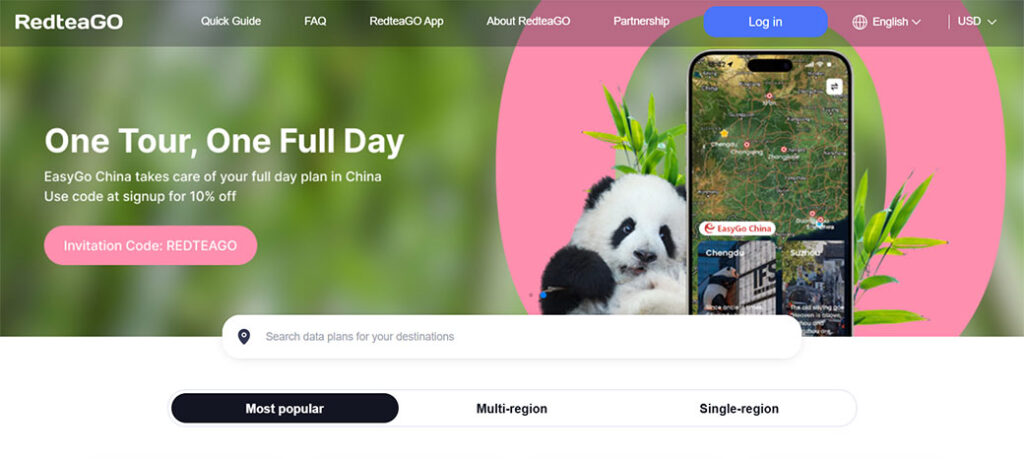
RedteaGO focuses on flexible, data focused eSIM plans for travelers who care about cost control and coverage variety. You choose from local, regional, and global plans with a wide range of data sizes and durations. You manage everything in an app, from purchase to top up. This model suits travelers who want options and do not want to overpay for unlimited data they will not use.
Holafly focuses heavily on convenience through many unlimited data plans, especially for popular tourist destinations. You usually pay a flat price for a set duration with unlimited data use, often with a data fair use policy on the backend. This structure fits travelers who prefer to pay once and forget about usage, even if the cost per gigabyte ends up higher.
When I compare reasons RedteaGO is better than Holafly, I look at three recurring themes. First, cost per gigabyte. Second, coverage and network performance. Third, flexibility for different trip styles, from short city breaks to multi country journeys.
Both services use eSIM technology, so you scan a QR code or install via app and avoid physical SIM cards. That part feels similar. The differences appear in pricing strategy, transparency, and the control you get as a user.
Pricing And Value: Getting More Data For Less Money
I put pricing first, because your data budget directly affects your total travel cost.
RedteaGO usually offers lower cost per gigabyte than Holafly. Plans often start at small data packages for short trips and scale up to larger data bundles for longer stays. You pay for what you plan to use. If you travel on a tight budget or move across countries for long periods, that difference adds up.
Holafly often promotes unlimited data plans. Those plans appeal to heavy users at first sight, yet they often cost more and may come with fair use limits that slow your speed after heavy use. For a lot of travelers, real monthly usage falls in the range of 3 to 20 gigabytes. Paying premium prices for unlimited data that you do not reach wastes money.
I see three pricing advantages on the RedteaGO side.
First, you get granular data options. You can pick 1, 3, 5, 10, 20 gigabytes or more, depending on region and country. That level of choice lets you align a plan with your own habits.
Second, top ups stay flexible. You often pay less when you add data to an active plan compared to buying a new flat unlimited plan at Holafly. This keeps your total cost predictable through the trip.
Third, RedteaGO frequently runs regional deals and time limited discounts that reduce average data price. Holafly tends to keep a stable premium price structure.
I use this rule for myself. If I travel for more than a few days and expect typical usage like maps, messages, ride hailing, and social check ins, RedteaGO almost always gives me more data for the same money or similar data for less money. This is one of the main reasons RedteaGO is better than Holafly for frequent travelers and remote workers.
Coverage And Network Quality Around The World
I treat coverage and network quality as non negotiable. Cheap data without signal has no value.
RedteaGO partners with multiple carriers in many countries and often lets the device connect to the strongest available network. This multi network approach improves stability, especially in regions where one operator has weaker service in rural areas or in dense city centers.
Holafly also partners with local operators, yet plan structures sometimes tie you to specific networks without much visibility into the alternatives.
From my experience and from user feedback I follow, RedteaGO tends to perform strongly in these areas.
In Europe, regional eSIMs on RedteaGO connect to high quality networks across countries, which suits rail trips and multi city tours.
Across parts of Asia, plans often support top tier operators in countries like Japan, South Korea, Singapore, and Thailand. This helps if you work remotely and need stable video calls.
In North America and major hubs in Latin America, RedteaGO coverage has grown fast, making it more viable for both short visits and longer stays.
Of course, network quality always depends on local towers and your device, and both providers rely on existing carriers. I still place RedteaGO ahead, because the focus on multi network roaming reduces dead zones and supports more consistent speeds across borders.
If you plan complex routes across continents, this kind of coverage strategy becomes a strong reason to choose RedteaGO over Holafly.
Flexibility Of Plans And Data Options
I see flexibility as the area where RedteaGO pulls furthest ahead.
You receive a wide spread of local, regional, and global plans on RedteaGO. You decide how long your plan lasts and how much data you buy. You can mix and match. For example, you might start with a regional plan for Europe, then add a country specific plan for a side trip to Turkey or the UAE.
Holafly tends to focus on fixed destination based unlimited plans. Those plans work fine if you stay in one country for a specific number of days and accept the price point. If your route changes often, this model becomes limiting and more expensive.
I also value that RedteaGO supports different usage styles. Light users choose small data packs for shorter trips. Business travelers or digital nomads select higher data caps or longer durations. You are not forced into one model.
Another benefit shows up for last minute changes. If you extend your trip, you top up an existing RedteaGO plan or switch to a new plan inside the app. You do not need to buy a new unlimited bundle every time you add a few days.
This flexibility pairs closely with budget control. You can start small and scale only when you see real usage. That approach fits real travel behavior better than single price unlimited plans that do not adapt to changing routes.
Ease Of Use, Setup, And Day-To-Day Management
I care a lot about ease of use, because I often set up eSIMs right after landing.
RedteaGO offers a clear in app experience. You browse plans by country or region. You see data amount, validity, price, and basic network info. Purchase and eSIM installation happen inside the app on supported devices or through a QR code. Instructions stay clear and simple.
Holafly setup works too, though the focus leans more on web based purchase and email delivery of eSIMs. That approach still works, yet it feels less streamlined when compared to a single app workflow.
During daily use, RedteaGO provides an easy view of remaining data and plan expiry. You track usage and decide when to top up. This visibility reduces stress, because you know when you approach your limit. Holafly unlimited plans often do not show detailed usage, which hides your real patterns and keeps you from optimizing.
I also like that RedteaGO supports multiple eSIMs on the same device. You keep different regional plans ready and switch as you cross borders, instead of deactivating one fixed destination unlimited plan and activating another.
For most travelers, especially those who visit more than one country per trip, this simple management flow becomes a daily advantage. You spend less time troubleshooting and more time using your phone as you expect.
Transparency, Customer Support, And User Trust
I look closely at transparency in pricing and terms, because confusing rules often create problems later.
RedteaGO usually presents data amounts, validity periods, and prices clearly in the app. If a plan has speed limits or other conditions, those details appear in the description. You see what you buy before you pay.
Holafly communicates unlimited data strongly, yet the fair use policies and potential speed limits sometimes sit in secondary documentation. This gap between headline marketing and detailed terms creates confusion for some users who expect full speed at all times.
On the support side, RedteaGO offers in app support and clear help documentation. Response times depend on time zones and demand, yet I see steady improvement and a direct focus on travelers who need quick, concrete answers.
Holafly also provides support, though user reports sometimes mention slower resolution when dealing with complex multi country trips or fair use speed reductions.
User trust grows from repeated experiences where service behaves as promised. When a provider tells you the data amount, price, and network type, then delivers that result, your confidence rises. My experience and feedback I monitor point to RedteaGO building strong trust in this regard, mainly because the offer structure is simple and the conditions align with real usage.
Who Should Choose RedteaGO Over Holafly?
I match each service to specific traveler profiles, because not every user needs the same solution.
RedteaGO fits you best if you travel often, visit multiple countries, or care about getting more data for less money. You benefit if you like to fine tune your plan size, switch between local and regional options, and track your usage clearly in an app.
You also gain more value from RedteaGO if you work remotely, join many video calls, or need consistent coverage while you move. The multi network partnerships and flexible plan structure support this pattern.
Holafly still makes sense for some travelers. If you go on a short holiday to a single country, prefer not to think about data amounts at all, and accept a higher flat price in exchange for simple unlimited style usage, Holafly may feel easier.
I still see more reasons RedteaGO is better than Holafly for most eSIM users who care about cost, coverage, and control at the same time. When you treat mobile data as part of your travel toolkit, RedteaGO aligns more closely with that mindset.
Conclusion
I base my preference on concrete travel use cases, not theory. Mobile data affects every part of a trip, from calling a ride to finding your hotel late at night. When I compare RedteaGO and Holafly across pricing, coverage, flexibility, ease of use, and transparency, the balance points in a clear direction.
How RedteaGO Stands Out In Real Travel Scenarios
I see RedteaGO excel when the trip goes beyond a single weekend in one city.
If you plan a two week route across several European countries, a regional RedteaGO plan gives you one eSIM that follows you. You stay online at border crossings, avoid extra purchases, and pay a competitive rate for the data you actually use.
For a month of remote work in Asia, you pick a higher data plan on RedteaGO, monitor your usage, and add top ups when needed. You avoid surprise slowdowns tied to fair use rules on an unlimited plan. Your cost per gigabyte stays predictable.
Even for short business trips, RedteaGO helps. You land, activate a local plan, and stay online for calls, email, and navigation. If the meeting extends, you extend your plan in the app instead of buying a whole new unlimited bundle.
Across these examples, the same pattern repeats. Clear pricing. Flexible data sizes. Solid coverage. Simple management.
When Holafly Might Still Make Sense
I do not ignore cases where Holafly suits a traveler.
If you visit a single destination for a fixed number of days, expect heavy streaming, and prefer one flat price without thinking about gigabytes, Holafly plans still appeal. You pay once, install the eSIM, and use data without watching a usage bar.
You might also pick Holafly if a specific destination has a strong promo or if your friends already use it and you want a shared, familiar setup.
I still weigh the overall picture and see more consistent advantages on the RedteaGO side. For global eSIM users who value control, transparency, and better cost per gigabyte, RedteaGO provides stronger day to day value than Holafly. When you plan your next trip, I suggest you start by comparing a RedteaGO plan that matches your route and data needs, then measure Holafly against that baseline. Your budget and your coverage will benefit from that comparison.
RedteaGO wins on value because it is transparent, tether-friendly, and significantly more affordable.
By opting for a RedteaGO regional plan, you get:
- Lower out-of-pocket costs for the data you actually use.
- A $3 Instant Referral Credit (using code
[RTGF938EU]) that often makes your first 1GB essentially free. - The freedom to hotspot your other devices without a 500MB “nanny” cap.
- Peace of mind with 60-day or 90-day validity windows.
Stop paying for the idea of unlimited and start paying for the reality of great connectivity.
Ready to save on your next trip? ➡️ Click here to grab your RedteaGO eSIM and claim your $3 FREE credit!